
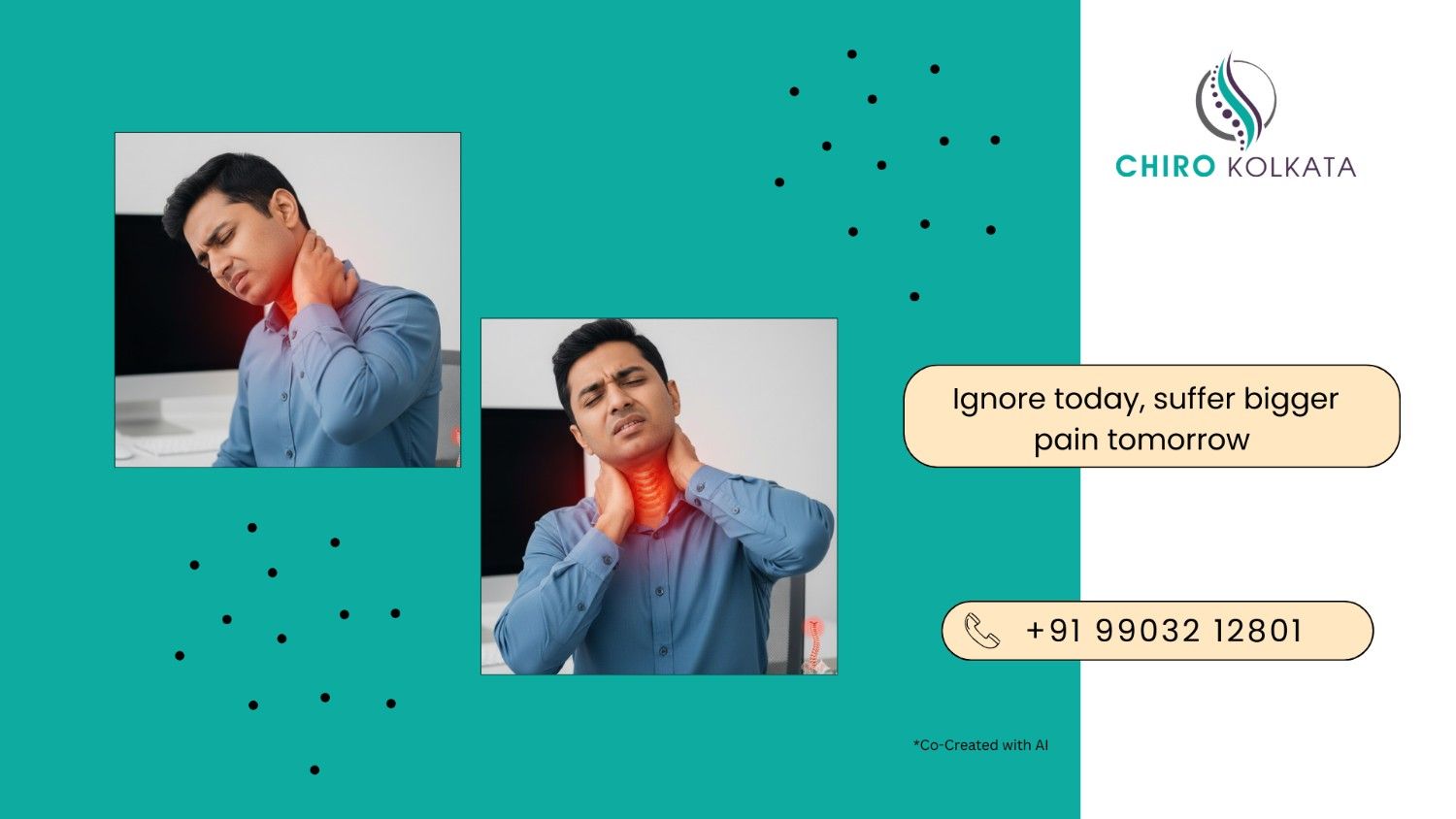
Mild neck pain is often dismissed as fatigue, poor sleep, or stress. Many people seek Chiropathy services in Kolkata when stiffness and discomfort persist beyond normal daily strain.
That assumption is risky. What begins as minor discomfort can evolve into structural damage, nerve irritation, and chronic disability if the underlying cause is not addressed. Individuals experiencing persistent symptoms often seek Chiropathy services in Kolkata to identify and address the root cause before the condition worsens.
How Chiropathy Services in Kolkata Help Address Mechanical Dysfunction
In its initial phase, neck pain is typically mechanical. Prolonged laptop use, mobile scrolling, and poor workstation ergonomics contribute to forward head posture. This posture increases load on the cervical spine, forcing muscles and joints to compensate.
At this stage, symptoms may include:
- Mild stiffness
- Occasional headaches
- Discomfort after long sitting
- Reduced range of motion
Without correction, repeated stress accelerates wear on cervical discs and joints. Many patients turn to Chiropathy services in Kolkata to improve spinal alignment and reduce mechanical strain before long-term damage occurs.
Progression to Disc Involvement
Persistent mechanical strain increases pressure on intervertebral discs. Gradually, the disc may begin to bulge or protrude. This condition, often referred to as a slip disc, marks a shift from simple muscle strain to structural compromise. At this stage, professional Chiropathy services in Kolkata may help support mobility and reduce stress on affected spinal structures.
When Neurological Symptoms Begin
If disc pressure or joint narrowing irritates nearby nerves, symptoms become neurological. You may experience:
- Tingling or numbness in the arms
- Burning or shooting pain
- Muscle weakness
- Persistent headaches
These signs indicate disruption in the brain–spine connection, where nerve signals are affected by mechanical compression. Early assessment through Chiropathy services in Kolkata can help identify biomechanical issues contributing to these symptoms.
The Risk of Chronic Pain
Untreated neck problems rarely remain localized. Poor spinal alignment alters load distribution across the entire spine. Cervical dysfunction may eventually influence the thoracic and lumbar regions, increasing the risk of secondary conditions such as lumbar disc bulge or sciatica.
Chronic inflammation and muscle guarding further reinforce pain cycles. At this stage, many individuals seek Chiropathy services in Kolkata to address underlying structural concerns rather than relying solely on temporary pain relief methods.
Why Early Intervention Matters
Early-stage neck pain often responds well to conservative care. Structured non-surgical treatment focuses on restoring alignment, relieving pressure, and correcting posture before degeneration progresses.
Effective strategies may include:
- Targeted spinal adjustments
- Posture correction therapy
- Strengthening and stabilization exercises
- Spinal decompression therapy when disc pressure is present
Accessing Chiropathy services in Kolkata early can help prevent the progression of cervical spondylosis and chronic nerve compression.
Urban Lifestyle and Neck Health
Urban professionals are particularly vulnerable due to prolonged screen exposure and sedentary habits. Long hours at desks, high stress levels, and limited movement intensify cervical strain. Preventive spine care, ergonomic correction, and regular assessments offered through Chiropathy services in Kolkata can help reduce long-term spinal stress.
The Importance of Professional Chiropathy Services in Kolkata
Mild neck pain is rarely harmless. It often marks the beginning of structural dysfunction within the musculoskeletal system. Left untreated, it can progress to disc degeneration, nerve irritation, and chronic neurological symptoms. Seeking Chiropathy services in Kolkata at an early stage can help restore proper spinal alignment, support the brain–spine connection, and reduce the risk of more serious complications.
With timely intervention and expert guidance, Chiropathy services in Kolkata can play an important role in maintaining mobility, productivity, and long-term spinal health.
Frequently Asked Questions
1. When should I consider Chiropathy services in Kolkata for neck pain?
If you experience persistent neck pain, stiffness, headaches, reduced mobility, or discomfort that affects your daily activities, seeking Chiropathy services in Kolkata may help identify the underlying cause and support recovery.
2. How do Chiropathy services in Kolkata help with neck pain?
Chiropathy services in Kolkata focus on improving spinal alignment, reducing pressure on joints and nerves, correcting posture, and enhancing mobility through non-surgical treatment approaches.
3. Can Chiropathy services in Kolkata help prevent long-term spine problems?
Yes. Early intervention through Chiropathy services in Kolkata can help address mechanical dysfunction, improve posture, and reduce the risk of chronic conditions such as cervical spondylosis, disc degeneration, and nerve compression.
Take the First Step Toward Better Spine Health
Don’t ignore persistent neck pain or stiffness. Early assessment and proper care can help prevent minor discomfort from developing into long-term spinal problems.
📍 Visit Chiro Kolkata
🌐 https://chirokolkata.com/
📞 Book your session today
📍 Location: Kolkata
📞 Call or WhatsApp: +91 99032 12801
Get expert care and take a proactive step toward improved mobility, better posture, and long-term spinal wellness.