
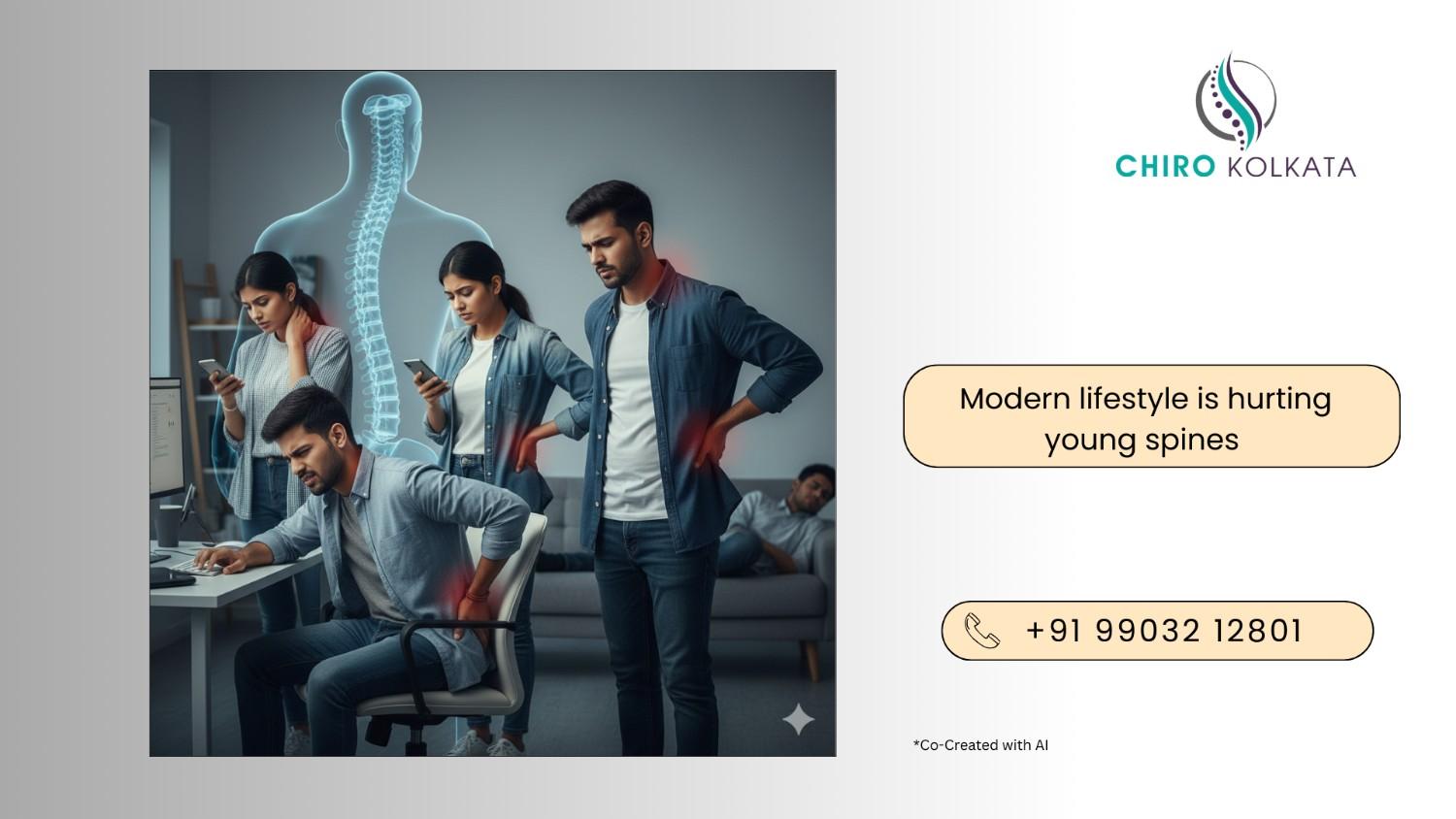
Spine Issues were once associated primarily with aging. Today, young adults in their 20s and 30s are increasingly experiencing Spine Issues such as persistent neck pain, lower back discomfort, and even early signs of disc degeneration. This shift is not accidental. It reflects lifestyle patterns that place continuous mechanical stress on the spine during peak working years. Ignoring these early signs increases the risk of chronic musculoskeletal disorders, long-term functional limitations, and dependency on pain medication.
The Sedentary Lifestyle Factor Behind Spine Issues
One of the leading causes of Spine Issues among young adults is prolonged sitting. Young professionals spend extended hours seated at offices, in vehicles, or at home using digital devices. Prolonged sitting compresses lumbar discs and weakens stabilizing muscles. Over time, this contributes to poor spinal alignment, early disc dehydration, and mechanical strain.
Sustained sitting also reduces circulation to spinal structures, accelerating degeneration. As a result, many young adults develop symptoms similar to early cervical spondylosis or lumbar disc bulge before the age of 35. Long periods of inactivity can also cause muscles to become tight and less supportive of the spine, increasing the risk of discomfort and mobility limitations. Without regular movement and posture correction, these changes may gradually worsen, making Spine Issues more likely to affect daily activities, workplace productivity, and overall physical well-being.
The Rise of Forward Head Posture and Spine Issues
Smartphone and laptop usage has significantly altered posture. Forward head posture increases the load on the cervical spine far beyond its natural capacity. This imbalance places excessive stress on ligaments, joints, and spinal discs, contributing to various Spine Issues.
Common early symptoms include:
- Neck stiffness
- Shoulder tightness
- Tension headaches
- Reduced neck mobility
If left uncorrected, this mechanical stress may eventually lead to disc protrusion, nerve irritation, and more severe Spine Issues.
Lack of Physical Conditioning
Despite growing awareness about fitness, many young adults lack adequate core strength and spinal stability. Weak abdominal and back muscles fail to provide proper support for the spine, increasing vulnerability to injury. Sudden gym workouts without appropriate conditioning can place additional strain on spinal structures.
Improper lifting techniques may also trigger conditions such as slip discs, muscle strains, and acute lumbar injuries, all of which contribute to Spine Issues later in life. Many individuals focus on intense workouts without first developing the foundational strength needed to support healthy movement patterns. Poor exercise form, inadequate warm-ups, and inconsistent physical activity can further increase stress on the spine. Over time, these factors may lead to recurring discomfort, reduced flexibility, and a greater risk of developing chronic Spine Issues that affect both daily activities and overall physical performance.
Stress and the Brain–Spine Connection
Chronic stress affects more than mental well-being. It can tighten muscles around the neck, shoulders, and back, creating additional strain on the spine. Sustained muscle tension disrupts the brain–spine connection, amplifying pain perception and limiting mobility.
Urban stress combined with sedentary behavior often creates a cycle of inflammation and mechanical overload. Over time, mild discomfort may develop into chronic pain patterns and persistent Spine Issues that affect daily life and productivity.
How Early Nerve Compression Leads to Spine Issues
When mechanical dysfunction continues without treatment, disc pressure may begin affecting nearby nerves. This can result in symptoms such as tingling, numbness, weakness, or radiating pain down the leg—classic signs of early sciatica.
At this stage, Spine Issues become more complex to manage. Conditions that might have been corrected through early intervention may now require structured decompression, rehabilitation, and long-term management strategies. In some cases, nerve compression can interfere with daily activities such as walking, sitting, or standing comfortably for extended periods. As pressure on the nerves increases, symptoms may become more frequent and intense, affecting overall quality of life. Early diagnosis and appropriate treatment can help reduce nerve irritation, restore function, and prevent further progression of Spine Issues.
Why Early Treatment of Spine Issues Matters
Early intervention is essential for preventing minor problems from developing into serious conditions. Most Spine Issues in young adults are manageable when identified and treated promptly. Structured non-surgical care focuses on correcting alignment, relieving disc pressure, improving mobility, and strengthening supportive musculature.
Professional evaluation helps identify biomechanical imbalances before they progress into advanced degeneration. For individuals seeking the Best Chiropathy services in Kolkata, early consultation allows for targeted correction rather than temporary symptom relief. Access to expert Chiropathy services in Kolkata may include posture analysis, spinal adjustments, rehabilitation programs, and decompression strategies designed for young working professionals.
Prevention Strategies to Reduce Spine Issues
Preventive care plays a crucial role in maintaining long-term spinal health. Effective strategies include:
- Regular posture assessments
- Strengthening core and stabilizing muscles
- Limiting prolonged periods of sitting
- Maintaining an ergonomic workspace
- Taking movement breaks throughout the day
- Scheduling periodic spinal evaluations
By adopting these habits early, young adults can significantly reduce their risk of developing Spine Issues and maintain better physical function over time.
Protecting Yourself from Future Spine Issues
Spinal health is not age-dependent—it is habit-dependent. The growing prevalence of Spine Issues among young adults highlights the impact of sedentary lifestyles, poor posture, inadequate conditioning, and chronic stress. Conditions such as cervical spondylosis, lumbar disc bulge, and sciatica are no longer limited to older populations.
Proactive intervention through structured spine care and expert Chiropathy services in Kolkata can help restore proper spinal alignment, protect the brain–spine connection, and prevent long-term complications. Spine Issues at a young age are not inevitable. With early attention, healthy habits, and appropriate care, they can often be prevented and effectively managed.
Don’t ignore the early signs of Spine Issues. Seeking professional care at the right time can help improve mobility, reduce discomfort, and support long-term spinal health.
📍 Visit Chiro Kolkata
🌐 https://chirokolkata.com/
📞 Book your session today
📍 Location: Kolkata
📞 Call or WhatsApp: +91 99032 12801
Take the first step toward a healthier spine and a more active lifestyle today.