

Have you ever sat at your desk for a few hours and noticed that your lower back starts aching, feels stiff, or hurts when you finally stand up? You may be wondering, Why does my lower back hurt after sitting?
In many cases, lower back pain after sitting is related to prolonged sitting, poor posture, muscle tightness, reduced movement, or excessive stress on the lower back. The good news is that simple changes to your sitting habits, regular movement, and appropriate professional care may help manage the discomfort.
Why does sitting cause lower back pain?
Prolonged sitting and back pain often go together because staying in one position for a long time can increase stress on the muscles, joints, and structures around the lumbar spine.
When you sit for hours, particularly while leaning forward or slouching, your lower back may lose its natural support. This can contribute to lumbar spine pain, stiffness, and muscle fatigue.
Common factors include:
- Poor sitting posture
- Sitting continuously for several hours
- Tight lower back muscles
- Weak core and supporting muscles
- Hip flexor tightness
- An unsuitable chair or lack of back support
- A sedentary lifestyle
This is why some people experience back pain when getting up from sitting, even though they felt relatively comfortable while seated.
How does poor posture cause lower back pain?
Your sitting position can make a significant difference. Slouching, leaning forward for long periods, or sitting without adequate back support can increase strain on the lower back. An ergonomic sitting position can help reduce unnecessary stress. Ideally, keep your back supported, feet comfortably on the floor, shoulders relaxed, and your screen at a suitable height.
However, even with proper sitting posture, staying in one position for too long can cause discomfort. Your body is designed to move, so regular movement is important.
Can prolonged sitting cause sciatica?
Sometimes, sitting can aggravate symptoms associated with sciatica pain from sitting. Sciatica may cause pain that travels from the lower back into the buttock or leg and can sometimes be accompanied by tingling, numbness, or weakness. Not every case of lower back pain is sciatica. The underlying cause can vary from person to person, so persistent or radiating pain should be properly assessed.
What can you do for lower back pain from sitting?
If sitting triggers your discomfort, try these practical habits:
- Take short movement breaks instead of sitting continuously.
- Adjust your chair to provide adequate back support.
- Maintain proper sitting posture.
- Change your position regularly.
- Include appropriate mobility exercises and stretching for lower back pain.
- Avoid suddenly increasing strenuous physical activity.
These habits may support lower back pain relief, but the right approach depends on the cause of your symptoms.
When should you see a professional?
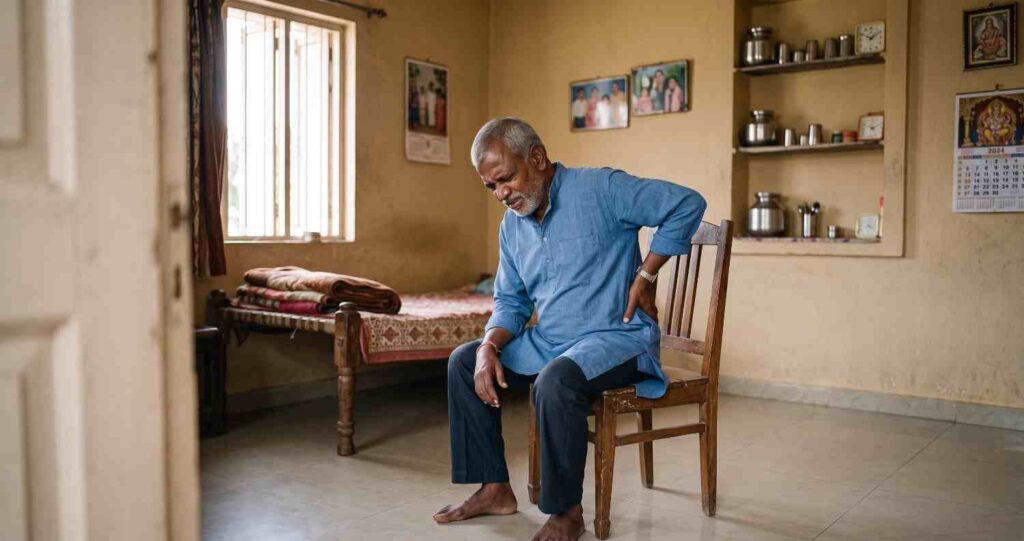
Occasional lower back stiffness after a long day of sitting is common. However, you should consider professional evaluation if your pain keeps returning, becomes severe, affects your daily activities, or is accompanied by numbness, weakness, or pain travelling down the leg.
At Chiro Kolkata – Dr Manas Kumar, individualized chiropractic and musculoskeletal care is provided based on the person’s symptoms and functional needs. Treatment approaches listed by the clinic include chiropractic manipulation, Muscle Energy Technique (MET), Myofascial Release (MFR), and graded joint mobilization.
Frequently Asked Questions
Q: Why does my lower back hurt after sitting for a long time?
A: Lower back pain after sitting may be associated with prolonged sitting, poor posture, muscle fatigue, reduced movement, or tight muscles around the lower back and hips.
Q: How do I relieve lower back pain from sitting?
A: Taking regular movement breaks, improving your sitting posture, adjusting your workstation, and incorporating appropriate mobility or stretching can help. If the pain persists, professional assessment may be appropriate.
Q: Why does my back hurt when I stand up after sitting?
A: This can happen when the muscles and joints around your lower back become stiff after remaining in one position. Repeated or significant pain should be assessed to determine the underlying cause.
Q: Is sitting bad for your lower back?
A: Sitting itself is not necessarily harmful, but prolonged sitting without movement or adequate support can contribute to back discomfort in some people.
Q: Can a chiropractor help with lower back pain?
A: A chiropractor may assess musculoskeletal factors contributing to back pain and recommend an individualized care plan. The appropriate treatment depends on the person’s symptoms and clinical assessment.
Reach Us
Chiro Kolkata – Dr Manas Kumar
Address: 4B, Pratapaditya Rd, near Rashbehari, Near 27 Pally Park, Sahanagar, Crossing, Kolkata, West Bengal 700026
Phone: 099032 12801
Website: Chiro Kolkata
If lower back pain from sitting is becoming a regular part of your day, don’t simply ignore it. Understanding the possible causes and getting appropriate professional guidance can be an important step toward moving more comfortably.