
Chiro

knee pain chiropractor in Kolkata

Chiropractic Treatment for Back Pain
chiropathy threatment in Kolkata

Is Spinal Manipulation Safe? Evidence-Based Insights

Spinal manipulation is one of the most discussed approaches in conservative spine care. While many patients report relief from neck and back pain, safety remains a common concern. The key question is not whether spinal manipulation works in isolation, but whether it is applied appropriately, after proper assessment, and within a structured treatment framework. Understanding the evidence and clinical reasoning behind spinal care helps separate myths from facts. What Is Spinal Manipulation? Spinal manipulation involves controlled, precise manual adjustments aimed at restoring optimal spinal alignment, improving joint mobility, and reducing mechanical stress on discs and nerves. It is commonly used in managing musculoskeletal disorders, particularly those affecting the cervical and lumbar spine. The primary objective is to address structural dysfunction rather than simply suppress pain. What Does the Evidence Say? Clinical studies indicate that spinal manipulation can be effective for acute and chronic low back pain, certain types of neck pain, and tension-related headaches when performed by trained professionals. Research supports its role as a non-surgical treatment option for mechanical spine conditions. Evidence also suggests that when proper screening is conducted, serious complications are rare. Most side effects, if they occur, are mild and temporary such as localized soreness or stiffness. The critical factor is patient selection. Not every case of back or neck pain is suitable for manipulation. When Is Spinal Manipulation Appropriate? Spinal manipulation is generally appropriate in cases involving: Mechanical neck or back pain Postural dysfunction such as forward head posture Early-stage cervical spondylosis Mild lumbar disc bulge without severe neurological deficit It is not recommended in cases involving spinal fractures, severe osteoporosis, advanced nerve compression, infections, or malignancy. Comprehensive evaluation is essential before initiating care. Mechanical vs. Neurological Considerations Mechanical pain caused by poor spinal alignment often responds well to manual correction. However, when significant nerve compression exists such as advanced slip disc or severe sciatica—treatment plans may require decompression strategies in addition to adjustments. Spinal manipulation works by improving joint mechanics and reducing stress on surrounding tissues, which in turn helps restore the brain–spine connection and optimize nerve function. Risk vs. Benefit Perspective All medical interventions carry some level of risk, including medications and surgery. Compared to long-term reliance on painkillers or invasive procedures, structured conservative spine care offers a lower-risk alternative when performed responsibly. The key determinants of safety include: Proper diagnosis Detailed clinical evaluation Individualized treatment planning Professional expertise   Patients seeking the Best Chiropathy services in Kolkata should prioritize clinics that emphasize diagnostic clarity and evidence-based protocols rather than generalized adjustments. The Role of Comprehensive Spine Care Spinal manipulation is rarely used alone in effective treatment programs. It is often combined with: Posture correction therapy Strengthening and stabilization exercises Spinal decompression therapy when disc pressure is present Lifestyle and ergonomic counselling Accessing structured Chiropathy services in Kolkata ensures that spinal manipulation is integrated into a broader rehabilitation strategy rather than delivered as a standalone intervention. Spinal manipulation, when performed by qualified professionals after thorough assessment, is considered a safe and effective non-surgical treatment for many musculoskeletal disorders. Its safety depends on accurate diagnosis, proper patient selection, and evidence-based clinical judgment. For individuals experiencing neck pain, back pain, early cervical spondylosis, or mild disc issues, conservative spine care offers a rational and lower-risk pathway. Spinal manipulation is not about force it is about restoring balance, correcting spinal alignment, and protecting the integrity of the brain–spine connection. When applied strategically within expert Chiropathy services in Kolkata, it becomes a valuable component of long-term spinal health management.  
Best Chiropractor in Kolkata
chiropathy threatment in Kolkata

Why Young Adults Are Now Suffering from Spine Issues?

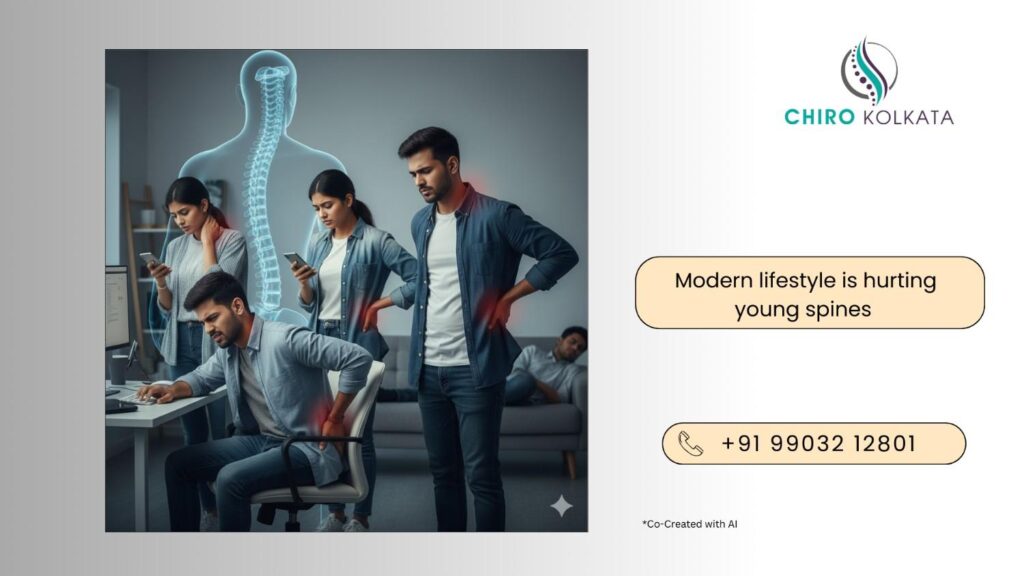
Spine problems were once associated with aging. Today, young adults in their 20s and 30s are reporting persistent neck pain, lower back discomfort, and early signs of disc degeneration. This shift is not accidental. It reflects lifestyle patterns that place continuous mechanical stress on the spine during peak working years. Ignoring these early signs increases the risk of chronic musculoskeletal disorders, long-term functional limitation, and dependency on pain medication. The Sedentary Lifestyle Factor Young professionals spend extended hours seated—at offices, in vehicles, or at home on digital devices. Prolonged sitting compresses lumbar discs and weakens stabilizing muscles. Over time, this leads to poor spinal alignment, early disc dehydration, and mechanical strain. Sustained sitting also reduces circulation to spinal structures, accelerating degeneration. Many young adults develop symptoms similar to early cervical spondylosis or lumbar disc bulge before the age of 35. The Rise of Forward Head Posture Smartphone and laptop usage has significantly altered posture. Forward head posture increases load on the cervical spine multiple times beyond its natural capacity. This imbalance strains ligaments, joints, and discs. Common early symptoms include: Neck stiffness Shoulder tightness Tension headaches Reduced neck mobility Left uncorrected, this mechanical stress may evolve into disc protrusion or nerve irritation. Lack of Physical Conditioning Despite awareness about fitness, many young adults lack core strength and spinal stability. Weak abdominal and back muscles fail to support proper spinal alignment, increasing vulnerability to injury. Sudden gym workouts without proper conditioning further strains the spine. Improper lifting techniques can trigger slip disc or acute lumbar injuries. Stress and the Brain–Spine Connection Chronic stress tightens muscles around the neck and shoulders. Sustained muscle tension disrupts the brain–spine connection, amplifying pain perception and limiting mobility. Urban stress combined with sedentary behaviour creates a cycle of inflammation and mechanical overload. Over time, mild discomfort transitions into chronic pain patterns. Early Nerve Involvement If mechanical dysfunction persists, disc pressure may begin affecting nearby nerves. This can lead to symptoms such as tingling, numbness, or radiating pain down the leg-classic early sciatica. At this stage, recovery becomes more complex. What could have been corrected with early intervention now requires structured decompression and rehabilitation. Why Early Spine Care Matters Spinal issues in young adults are preventable and manageable when addressed early. Structured non-surgical treatment focuses on correcting alignment, relieving disc pressure, and strengthening supportive musculature. Professional evaluation helps identify biomechanical imbalances before they escalate into advanced degeneration. For individuals seeking the Best Chiropathy services in Kolkata, early consultation ensures targeted correction rather than temporary symptom relief. Access to expert Chiropathy services in Kolkata provides posture analysis, spinal adjustments, rehabilitation programs, and decompression strategies tailored to young working professionals. Prevention Strategies for Young Adults Preventive care should include: Regular posture assessment Strengthening core and stabilizing muscles Limiting prolonged static sitting Ergonomic workplace setup Periodic spinal evaluations Spinal health is not age-dependent. It is habit-dependent. Young adults are increasingly experiencing spine issues due to sedentary routines, poor posture, inadequate conditioning, and high stress levels. Conditions like cervical spondylosis, lumbar disc bulge, and sciatica are no longer confined to older populations. Proactive intervention through structured spine care and expert Chiropathy services in Kolkata can restore proper spinal alignment, protect the brain–spine connection, and prevent long-term complications. Spine problems at a young age are not inevitable. They are preventable when addressed early and managed strategically.  

Neck pain chiropractor Kolkata
Chiropractic treatment in Kolkata for neck pain

Why Ignoring Mild Neck Pain Can Lead to Bigger Problems?

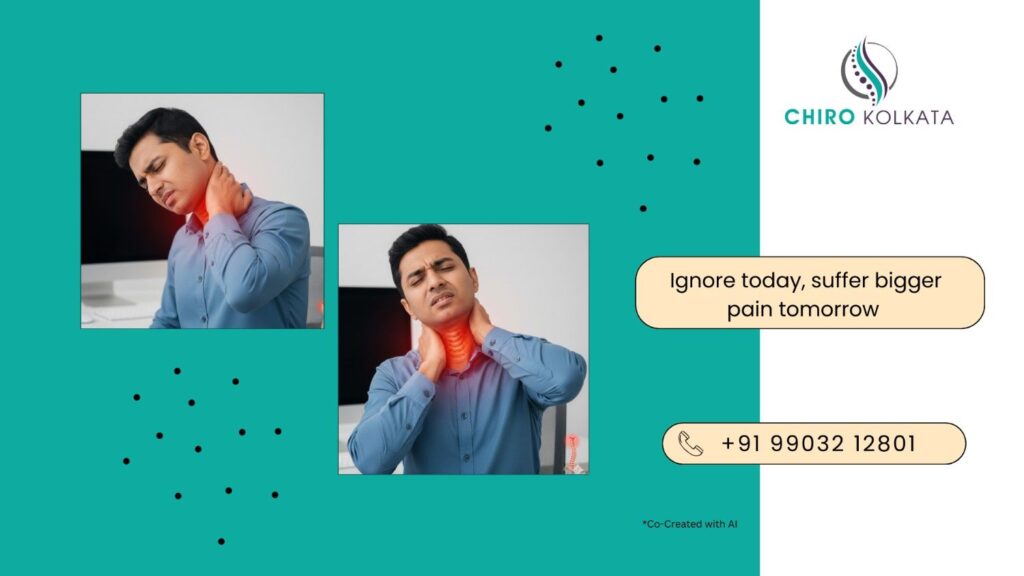
Mild neck pain is often dismissed as fatigue, poor sleep, or stress. Many urban professionals normalize stiffness after long workdays. That assumption is risky. What begins as minor discomfort can evolve into structural damage, nerve irritation, and chronic disability if the underlying cause is not addressed. Neck pain is rarely random. It usually reflects imbalance in spinal alignment, muscular strain, or early-stage musculoskeletal disorders. The Early Stage: Mechanical Dysfunction In its initial phase, neck pain is typically mechanical. Prolonged laptop use, mobile scrolling, and poor workstation ergonomics contribute to forward head posture. This posture increases load on the cervical spine, forcing muscles and joints to compensate. At this stage, symptoms may include: Mild stiffness Occasional headaches Discomfort after long sitting Reduced range of motion Without correction, repeated stress accelerates wear on cervical discs and joints. Over time, this can progress to cervical spondylosis or disc degeneration. Progression to Disc Involvement Persistent mechanical strain increases pressure on intervertebral discs. Gradually, the disc may begin to bulge or protrude. This condition, often referred to as slip disc in common language, marks a shift from simple muscle strain to structural compromise. At this point, pain becomes more frequent and may radiate into the shoulders or arms. Ignoring symptoms during this stage increases the likelihood of nerve compression. When Neurological Symptoms Begin If disc pressure or joint narrowing irritates nearby nerves, symptoms become neurological. You may experience: Tingling or numbness in the arms Burning or shooting pain Muscle weakness Persistent headaches These signs indicate disruption in the brain–spine connection, where nerve signals are affected by mechanical compression. Neurological pain is more complex and requires longer recovery compared to early mechanical dysfunction. The Risk of Chronic Pain Untreated neck problems rarely remain localized. Poor spinal alignment alters load distribution across the entire spine. Cervical dysfunction may eventually influence the thoracic and lumbar regions, increasing the risk of secondary conditions such as lumbar disc bulge or even sciatica. Chronic inflammation and muscle guarding further reinforce pain cycles. At this stage, patients often rely on medication for temporary relief instead of addressing structural causes. Why Early Intervention Matters Early-stage neck pain responds well to conservative care. Structured non-surgical treatment focuses on restoring alignment, relieving pressure, and correcting posture before degeneration progresses. Effective strategies may include: Targeted spinal adjustments Posture correction therapy Strengthening and stabilization exercises Spinal decompression therapy when disc pressure is present Early management prevents escalation into advanced cervical spondylosis or chronic nerve compression. Urban Lifestyle and Neck Health Urban professionals are particularly vulnerable due to prolonged screen exposure and sedentary habits. Long hours at desks, high stress levels, and limited movement intensify cervical strain. Preventive spine care including ergonomic correction and regular spinal assessments reduces long-term risk. Neck pain is not an unavoidable consequence of modern work culture. It is a signal of imbalance. Mild neck pain is rarely harmless. It often marks the beginning of structural dysfunction within the musculoskeletal system. Left untreated, it can progress to disc degeneration, nerve irritation, and chronic neurological symptoms. Addressing the problem early through structured non-surgical treatment restores proper spinal alignment, protects the brain–spine connection, and prevents more serious complications like slip disc or persistent nerve pain. Ignoring early signs delays recovery. Taking action preserves mobility, productivity, and long-term spinal health.  

Best Chiropractor in Kolkata
Uncategorized

Why Standing in One Place Causes More Pain Than Walking?

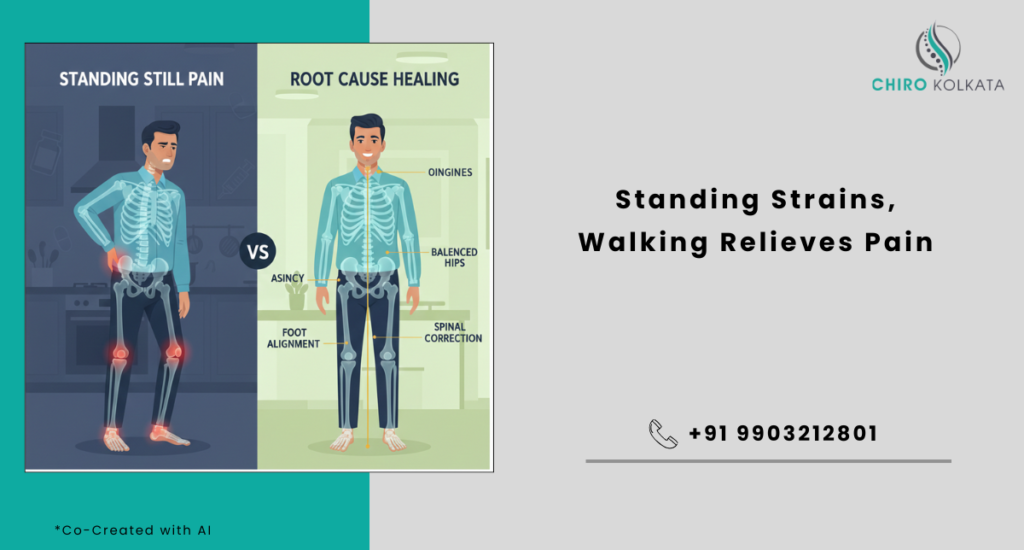
Many people find this confusing: standing in one place, waiting in a line, cooking in the kitchen, standing in office causes more pain than walking. The back starts aching, legs feel heavy, feet burn, and the body looks for support. Yet the same person may feel relatively better while walking. This is not normal ageing or weakness. It is a clear sign of body imbalance, and this is exactly the kind of problem chiropathy focuses on. What Really Happens When You Stand Still When you stand in one place, your body has no movement to redistribute pressure. All your body weight stays loaded on the same joints and muscles continuously. If your posture, foot alignment, or weight distribution is even slightly off, certain areas start taking excess stress without a break. Most people unconsciously lean more on one leg while standing. This feels comfortable in the moment, but it overloads one foot, one knee, one hip, and one side of the lower back. Muscles fatigue quickly, circulation reduces, and pain builds up faster than expected. Why Walking Feels Easier Than Standing Walking allows constant weight shifting. One, foot bears weight, then the other. Muscles contract and relax rhythmically, blood flow improves, and stiffness reduces. Even if alignment is not perfect, movement prevents stress from staying in one place for too long. This is why many people say, “Walking is okay, but standing kills my back.” The problem is not walking, it’s how the body handles static load. The Real Reason Standing Pain Keeps Increasing Pain while standing usually points to deeper issues like foot imbalance, uneven weight distribution, pelvic tilt, weak support muscles, or postural misalignment. These problems often don’t appear on X-rays or MRIs, which is why people are told “reports are normal” while pain continues. Painkillers may reduce discomfort, but they don’t teach the body how to stand correctly again. So, the pain returns every time you stand still. How ChiroKolkata Connects Standing Pain to the Root Cause At ChiroKolkata, standing pain is never treated as just a back or leg problem. Their chiropathy-based approach looks at the entire chain how your feet touch the ground, how weight travels upward, how posture is maintained, and where compensation is happening. ChiroKolkata’s services focus on: Analysing standing posture and walking pattern Identifying foot and alignment imbalance Correcting the root cause rather than masking pain Helping the body regain balance naturally When alignment improves, the body can tolerate standing without overload, and pain reduces on its own without long-term dependence on medicines. Why You Should Not Ignore Standing Pain Pain while standing is an early warning. Ignoring it can lead to chronic knee pain, hip problems, lower back issues, and reduced mobility over time. What starts as discomfort during standing can slowly affect everyday life. Standing should not be harder than walking. If it is, your body is telling you that something is out of balance. Instead of adjusting your position again and again or depending on painkillers, addressing the root cause is the real solution. With chiropathy-based correction at ChiroKolkata, standing pain is not just relieved it is understood and corrected from the ground up.  

Sciatica Treatment in Kolkata
Uncategorized

How Chiropathy Helps Patients Who Have “Tried Everything”?

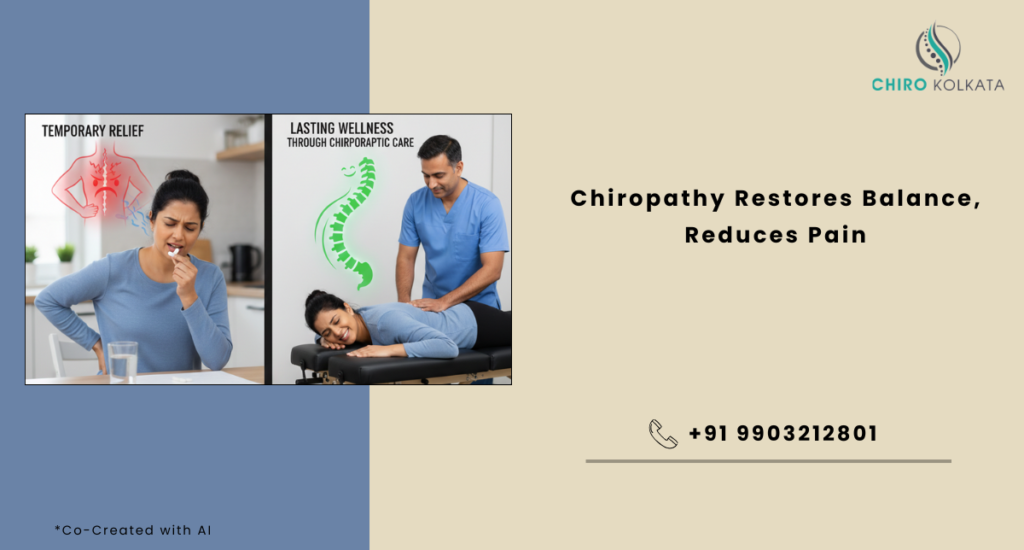
Many patients walk into a clinic carrying more than pain, they carry frustration. They’ve tried painkillers, physiotherapy, injections, exercises, and countless home remedies. Some have even been told, “You’ll have to live with it.” Yet the pain keeps coming back. For patients who feel they have “tried everything,” chiropathy often offers a different and much-needed perspective. Why “Everything” Often Doesn’t Work Most treatments focus on where the pain is felt, not why it exists. Painkillers block pain signals, therapies relax tight muscles, and injections reduce inflammation. These approaches can provide temporary relief, but if the body’s alignment remains disturbed, stress continues with every step, every sit, and every movement. That’s why pain returns once treatment stops. Pain Is Often a Chain Reaction In many chronic cases, pain is not local, it’s connected. A small imbalance in the foot can affect the knee, tilt the hip, strain the lower back, and eventually cause neck or shoulder pain. Treating only one link of this chain leaves the root problem untouched. Patients feel confused when reports are “normal” but pain persists. Functional issues like posture, walking pattern, and weight distribution rarely show clearly on scans. How Chiropathy Takes a Different Approach Chiropathy looks at the body as a single connected system. Instead of asking, “Where does it hurt?” it asks, “Where did the imbalance start?” At ChiroKolkata, chiropathy-based assessment focuses on posture, gait, foot mechanics, and overall alignment. By identifying the source of imbalance, treatment aims to correct the cause rather than suppress the symptom. Why Patients Feel Relief After Long Struggles When alignment improves: Joints are no longer overloaded Muscles stop compensating unnecessarily Nerves calm naturally Pain reduces without being forced into silence This is why many patients who “tried everything” finally experience lasting relief not because their pain was special, but because the cause was finally addressed. Healing Without Dependence Another reason patient choose chiropathy is its non-invasive nature. There is no long-term reliance on painkillers or injections. The body is guided back toward balance so it can heal on its own. If you feel you’ve tried everything and nothing worked, it doesn’t mean your pain is untreatable. It often means the right approach was never applied. Chiropathy offers a root-cause method for patients who are tired of temporary fixes. Sometimes, healing begins not with something new, but with finally understanding what your body has been trying to say all along.  

Chiropractic Treatment for Back Pain
Uncategorized

How Wrong Posture Slowly Changes Your Body Shape?

Most people think posture only affects how they look while standing or sitting. In reality, posture quietly reshapes your body over time. The way you sit at work, bend while doing daily chores, look down at your phone, or walk on the road sends constant signals to your muscles and joints. When these positions are wrong and repeated every day, the body slowly adapts and those adaptations eventually change body shape. Posture Is a Habit, Not a Moment Posture is not something you correct once and forget. It is a daily habit formed over years. Long hours of sitting, slouching on sofas, leaning on one side, or walking with imbalance train certain muscles to overwork while others become weak. Over time, this muscular imbalance begins to pull the body out of alignment. How Wrong Posture Changes the Body Wrong posture does not cause sudden changes, it works gradually. Rounded shoulders slowly collapse the chest and increase upper-back curvature. A forward head position makes the neck carry excess load. Prolonged sitting tightens the hips, tilts the pelvis, and flattens or exaggerates the lower-back curve. As these changes progress, many people start noticing uneven shoulders, a tilted waist, protruding abdomen without weight gain, or one side of the body appearing higher than the other. These are structural adaptations, not cosmetic issues. Why Pain Follows Postural Changes Once body shape changes, joints and muscles are forced to work in unnatural positions. Some muscles remain constantly tight, while others stop supporting properly. This leads to recurring neck pain, back pain, hip discomfort, and knee stress, often without any injury. Scans may appear normal because posture-related problems are functional, not always visible on imaging. How ChiroKolkata Helps Correct Posture At ChiroKolkata, posture correction goes beyond “stand straight” advice. Through chiropathy-based assessment, the team evaluates posture, walking pattern, foot alignment, and weight distribution. Their services focus on correcting the root cause of postural imbalance, starting from the foundation of the body. By restoring proper alignment through non-invasive chiropathy techniques, ChiroKolkata helps the body gradually return to its natural shape, reducing stress on joints and muscles without long-term medication. Why Early Correction Is Important Ignoring posture-related changes allows the body to adapt further, making correction more difficult later. Early intervention prevents long-term damage and chronic pain. Wrong posture doesn’t just affect appearance, it slowly reshapes the body and creates pain. With proper assessment and root-cause correction through services offered at ChiroKolkata, posture can be corrected naturally, helping the body regain balance, comfort, and long-term health.