
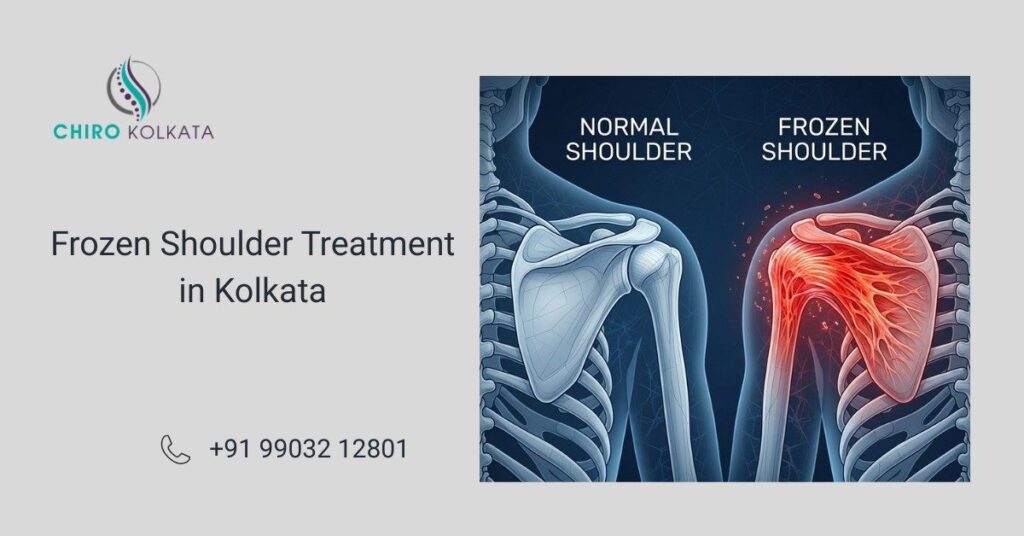
Frozen Shoulder Treatment in Kolkata: Causes, Symptoms and Care
Frozen shoulder, medically known as adhesive capsulitis, is a condition that can cause shoulder pain, stiffness and difficulty with everyday movements. Activities such as reaching overhead, dressing, combing the hair or moving the arm behind the back may become uncomfortable or restricted. If you are looking for Frozen Shoulder Treatment in Kolkata, it is important to understand the possible causes and seek an appropriate assessment before starting treatment. At Chiro Kolkata, treatment is planned according to the individual’s symptoms, physical findings, movement limitations and overall condition. What Is Frozen Shoulder? Frozen shoulder develops when the tissues surrounding the shoulder joint become irritated and stiff, which can gradually restrict movement. The condition may develop without an obvious cause or may occur following an injury, surgery, prolonged shoulder immobilisation or certain health conditions. Symptoms can develop gradually and may vary from person to person. Some individuals experience considerable stiffness, while others may initially notice more pain. A proper assessment can help determine whether the symptoms are consistent with frozen shoulder or whether another shoulder condition may be contributing to the problem. Common Symptoms of Frozen Shoulder Common symptoms may include: Shoulder pain, particularly during movement Increasing stiffness in the shoulder Difficulty raising the arm Difficulty reaching behind the back Reduced range of shoulder movement Discomfort while sleeping on the affected side Difficulty performing everyday activities The severity and progression of symptoms can vary between individuals. Persistent or worsening shoulder pain should be evaluated by an appropriate healthcare professional. What Causes Frozen Shoulder? The exact cause of frozen shoulder is not always clear. It may occur without a specific injury, while in other cases it can be associated with factors such as: Previous shoulder injury Shoulder surgery Reduced shoulder movement for an extended period Certain medical conditions Age-related changes Prolonged stiffness following an injury Identifying contributing factors can help healthcare professionals develop a more appropriate management plan. Stages of Frozen Shoulder Frozen shoulder is commonly described in three stages, although the duration and experience of each stage can differ. Freezing Stage During this stage, shoulder pain may gradually increase and movement can become more restricted. Pain may also interfere with sleep and routine activities. Frozen Stage Pain may become less intense for some people, but stiffness can become more noticeable. Shoulder movement may remain significantly limited. Thawing Stage During this stage, shoulder movement may gradually improve. The rate of improvement varies between individuals and can depend on several factors. Because frozen shoulder can progress differently from person to person, an individual assessment is important when deciding on appropriate care. Frozen Shoulder Treatment in Kolkata at Chiro Kolkata At Chiro Kolkata, Frozen Shoulder Treatment in Kolkata is approached according to the individual’s symptoms, mobility and clinical assessment. Depending on the condition, treatment may involve a combination of manual therapy, mobility exercises, physiotherapy-based techniques and rehabilitation exercises. Manual Therapy Manual therapy may be used to address soft-tissue restrictions and support comfortable shoulder movement. The techniques selected depend on the individual’s presentation and tolerance. Mobility Exercises Specific shoulder mobility exercises may help maintain or gradually improve movement. Exercises should be selected according to the person’s current range of motion and physical condition. Muscle Energy Technique Muscle Energy Technique (MET) may be incorporated where appropriate to address muscular restrictions and support joint movement. Its suitability depends on the individual’s assessment. Soft Tissue Therapy Soft tissue techniques may be used to address muscle tension around the shoulder and surrounding areas. Treatment is adapted according to the patient’s symptoms and response. Rehabilitation Exercises A personalised exercise programme may help support shoulder mobility, strength and functional movement. Exercises should be progressed gradually rather than based on a fixed programme for everyone. Why Individual Assessment Matters Shoulder pain and restricted movement can have several possible causes. Frozen shoulder may sometimes resemble other shoulder problems, so an appropriate assessment is important before deciding on treatment. At Chiro Kolkata, the assessment can consider factors such as: Shoulder range of motion Pain patterns Muscle and joint movement Previous injuries Daily activities Posture and movement patterns Based on these findings, an appropriate care plan can be discussed. How Long Does Frozen Shoulder Take to Improve? There is no single recovery timeline that applies to everyone with frozen shoulder. The condition can change gradually, and the duration may depend on factors such as the stage of the condition, severity of symptoms, general health and response to treatment. For this reason, it is better to avoid promising a specific number of sessions or a fixed recovery period. Results may vary between individuals. When Should You Seek Professional Assessment? Consider seeking professional advice if shoulder pain or stiffness is: Persistent or progressively worsening Affecting sleep Limiting everyday activities Making it difficult to raise or rotate the arm Associated with significant weakness or injury Not improving with appropriate self-care An assessment can help determine whether frozen shoulder may be contributing to your symptoms and whether further medical evaluation is required. Why Choose Chiro Kolkata? Chiro Kolkata provides personalised chiropractic, physiotherapy and movement-based care for people experiencing musculoskeletal problems. For Frozen Shoulder Treatment in Kolkata, the focus is on understanding the individual’s movement limitations and developing an appropriate treatment and rehabilitation approach. Treatment suitability depends on the person’s condition and assessment, and outcomes can vary between individuals. The clinic uses techniques such as manual therapy, mobility work, soft tissue techniques and corrective rehabilitation exercises where appropriate. Frequently Asked Questions Can chiropractic care help with frozen shoulder? Depending on the individual’s condition, chiropractic and manual therapy approaches may help support shoulder mobility and manage discomfort. Treatment should be selected after an appropriate assessment. How long does frozen shoulder last? The duration can vary considerably between individuals. Frozen shoulder may progress through different stages, and recovery does not follow exactly the same timeline for everyone. Can exercises help frozen shoulder? Appropriately selected mobility and rehabilitation exercises may help maintain or improve shoulder movement. Exercises should be adjusted according to the individual’s symptoms, mobility and stage of the condition. Is frozen shoulder
